
Dunham Massey's Mini Park Loop is an official National Trust circular walk where dogs are welcome on a short lead. It runs through a deer-park setting, so choose the visit around your ability to manage your dog near wildlife—not only the route's easy label. Check current notices and dog-access rules before travelling.
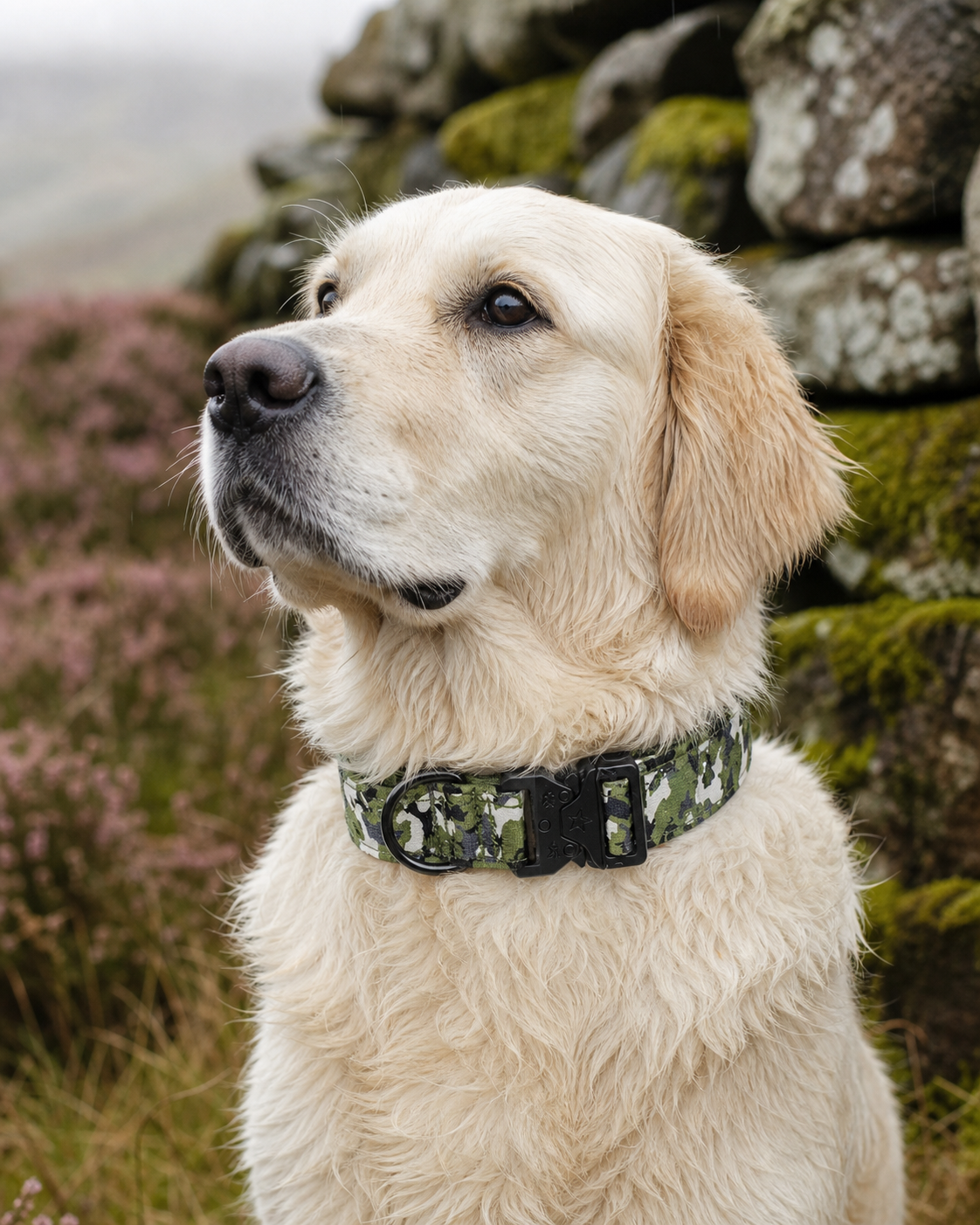
This guide uses National Trust information reviewed on 17 October 2026. We have not personally walked or assessed the route for this article. The accompanying Moorland photograph is an illustration of walking equipment, not a photograph of Dunham Massey. Use the official map and directions for navigation, and treat current signs as part of the visit.
Know which walk you are choosing
The official Mini Park Loop page lists a circular route of 1.8 miles, or 2.88 kilometres, starting and finishing at the visitor-centre entrance. Its published estimate is thirty to fifty minutes. The route avoids the deer-sanctuary areas, which are closed to visitors, and normal admission arrangements apply.
The page labels the route easy and notes seating along the walk. These are useful planning details, but they are not a personal accessibility assessment or a guarantee of conditions on a future day. Your group may need a different amount of time, particularly with stops, children or a dog.
Save the complete route title. Dunham Massey has other walks and visitor areas, and a link labelled only with the estate name may not lead to the same circuit. Make sure everyone arranging the outing is using the same route rather than combining one page's distance with another page's directions.
The deer setting is the main consideration
The Trust's deer-park guidance asks visitors not to approach or feed deer and to respect the sanctuary areas. It describes autumn as the rutting season, with the peak in October. Keep those seasonal circumstances in mind when considering a dog walk.
Do not plan the outing around getting close to wildlife for a photograph. A dog-friendly route is not an invitation for a dog to meet deer. Choose distance, follow current guidance and be prepared to change the outing if the situation is not manageable.
If your dog is highly interested in wildlife or difficult to handle around it, a different location may be more suitable. Do not use an unfamiliar deer park as a place to discover whether a new piece of equipment resolves that issue. Seek appropriate qualified advice for the dog rather than relying on a route article.
Apply the short-lead requirement
The official dog-visit page welcomes dogs on short leads in the deer park. It distinguishes the park from other areas, including the gardens and North Park. The Mini Park Loop's own page also specifies a short lead; use that requirement for this outing.
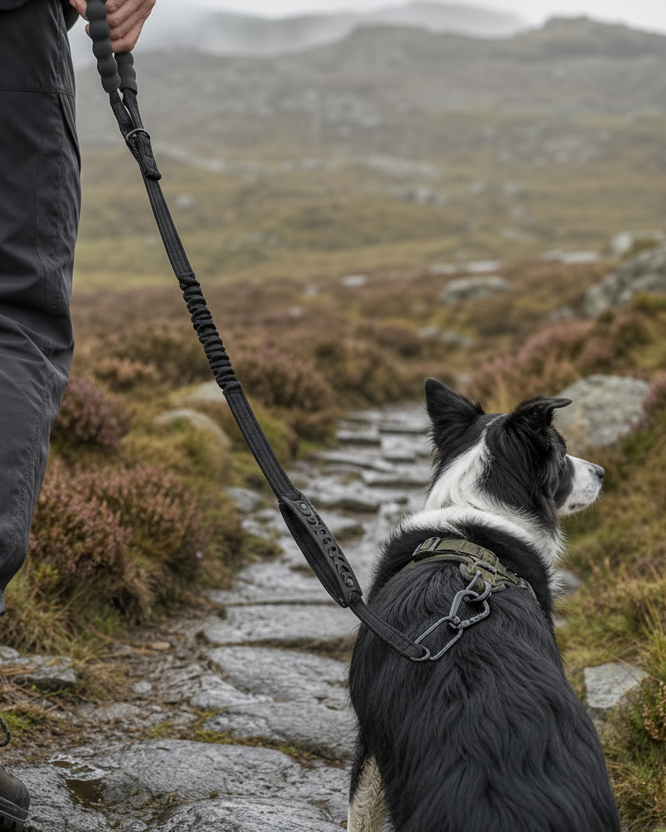
Check that your usual lead setup lets you manage the dog within the available shared space. Follow the equipment instructions and do not improvise clips or attachments. An extending or elasticated product should not be assumed to meet a site requirement without understanding its actual working arrangement.
Moorland's All-Weather Reflective Control Harness is one item to compare for ordinary walks, using the exact size information. This article does not claim it has been tested at Dunham Massey, guarantees control around deer or replaces the need to choose an appropriate visit.
Keep the visitor areas separate in your plan
A park walk, garden visit and indoor stop can have different dog arrangements. When checked on 17 October 2026, the dog page stated that garden access for dogs on short leads begins at noon, while historic buildings have assistance-dog restrictions. Recheck the current policy for the intended date rather than treating that arrangement as permanent.
If you are meeting someone, make the meeting point specific. “At Dunham Massey” is less useful than naming the visitor-centre entrance or another confirmed accessible location. A clear meeting place prevents one person waiting in an area another cannot enter with the dog.
Also decide which part of the day is essential. If the main purpose is a manageable park walk, an optional indoor visit should not create a problem for the dog or split the group unexpectedly. You can keep the outing simple instead of trying to include every attraction.
Plan food outside the deer park
The deer-park guidance asks visitors not to picnic inside the deer park and points to picnic areas elsewhere. Do not treat an open patch of grass beside the route as an automatic lunch stop. Check the current visitor information for the appropriate place to eat.
This distinction matters when walking with children or travelling some distance. If lunch is part of the plan, arrange where it belongs before beginning the circuit. Otherwise a hungry group may end up trying to improvise in a location where the activity is not permitted.
Keep food and waste managed appropriately throughout the visit. Do not feed wildlife or allow wrappers to become part of the environment. Carry away litter if a suitable bin is not immediately available. A tidy departure is part of enjoying a shared estate, not an optional extra after the photograph.
Use the official route, not a shortcut across the park
Open the current route page and map before departure. It provides the sequence through the park and identifies the intended path. This article does not reproduce every turn. Using the official directions keeps route navigation with the organisation responsible for publishing it.
Respect sanctuary boundaries and any temporary diversions. An apparently direct line across grass is not necessarily a permitted shortcut. If a gate, sign or closure changes what you expected, ask the visitor team or choose an appropriate alternative rather than assuming the published circuit entitles you to pass anywhere.
At junctions, stop somewhere suitable to check directions. Keep the dog managed while another person navigates if that is easier. Do not spread the group across the path or allow a lead to cross the route of approaching visitors while everyone looks at a phone.
Think about access needs before arriving
The route page includes accessibility information and describes the walk as accessible across seasons. That does not tell you every detail of surface condition, gradients or individual access needs. Read the complete current information and contact the estate if a particular feature will determine whether the visit works.
Ask a specific question: whether a mobility aid can use the complete intended circuit, whether a particular gate is manageable or where suitable facilities are located. Avoid asking only whether the place is “accessible,” because the answer depends on what you need and which part you plan to visit.
Keep an alternative outing available if an essential detail remains uncertain. It is better to resolve a practical question before travelling than to arrive with a group whose needs the plan cannot accommodate. A change of destination is not a failure of enthusiasm.
Check the whole visit cost and time
Use the official estate page for current opening times, admission and parking information. This guide deliberately does not quote a fee or promise a facility's future hours. Current visitor arrangements can change independently of the route description.
Count travel, arrival, the walk and any planned break separately. A thirty-to-fifty-minute route estimate is not the complete duration of a day out. Add time for your actual group rather than relying on the fastest number in the range.
If the visit is a special journey, decide what would make it worthwhile without pushing the dog beyond a suitable outing. You do not need to extend the walk simply because the drive was long. A local alternative may be a better choice on a day with a tight schedule or unsuitable conditions.
Prepare for shared paths and passing
Think about how the group will move when other visitors approach. Keep enough room for passing and avoid gathering around a narrow point. A short lead should be managed thoughtfully rather than becoming a line across the path.
Tell children and companions that wildlife is observed from a distance and that the dog should not approach other visitors without agreement. Those expectations are easier to share before the outing than during a crowded moment beside the path.
If conversation makes it hard to pay attention, pause in a suitable place. The walk can be social without requiring the handler to divide attention constantly. You are responsible for the dog even when the setting looks calm and everyone else seems relaxed.
A practical family-visit example
Imagine a fictional group with two adults, a child and one dog. They want a modest outdoor outing and lunch afterwards. Their first idea is to arrive without checking details, walk wherever looks interesting and eat in the park when the child gets hungry.
After reading the official information, they choose the Mini Park Loop, confirm the current admission arrangements and identify a permitted place for lunch outside the deer park. One adult handles the dog while the other helps with navigation and the child. They keep the dog on the required short lead.
The plan remains flexible. If current conditions or wildlife make the outing unsuitable, they change it. This is not a recommendation that every family or dog should use the same arrangement. It illustrates how a few location-specific facts can make the difference between a clear day out and repeated improvisation.
What to check on arrival
If the dog and the rest of the group want different days
Consider a second fictional group: two friends want a leisurely visit with wildlife photography, while the person bringing the dog knows that keeping distance from wildlife requires their full attention. The group should not assume that one outing can meet both intentions at every moment. Discuss the difference before travelling.
One option is to choose another destination together. Another is for the dog walker to make an appropriate shorter visit while the others pursue a separate activity, with a clear meeting plan and responsible care throughout. Do not leave the dog unattended or rely on an unsuitable waiting arrangement simply to preserve the original itinerary. The correct choice depends on the actual people, dog and conditions.
The point is not that dog owners should avoid every wildlife setting. It is that an honest plan recognises competing demands. A photographer's wish to linger or move closer should not set the handler's route. Equally, the rest of the group should know if the dog walk is the only activity that can be managed on that day. A conversation at home can avoid a pressured decision at the park gates.
Read the visitor notices before beginning. Confirm that the intended route is available and look for any temporary instructions affecting dogs, wildlife or access. An article checked earlier in the month cannot provide that final confirmation.
Make sure the group knows the meeting and return plan. If someone wants a different activity, decide how that works before separating. Keep the dog with a responsible person and do not rely on an assumption that another member of the group is watching.
Then take the route at a suitable pace, using the official directions and responding to the circumstances in front of you. You do not need to complete every optional stop or take a close wildlife photograph for the visit to be worthwhile.
Your Dunham Massey planning card
Keep a dated copy of your own practical notes after the visit, but check the official policy again before returning. A familiar destination can change its visitor arrangements just as an unfamiliar one can. Your previous enjoyable outing is useful experience, not permanent confirmation of access, conditions or suitability for a different dog.
- Exact route: Mini Park Loop, not an unspecified estate walk.
- Official published distance: 1.8 miles / 2.88 kilometres, checked 17 October 2026.
- Published duration: thirty to fifty minutes, not a guarantee for your group.
- Dog arrangement: short lead on this route and in the deer park.
- Wildlife: respect distance, sanctuary boundaries and current seasonal guidance.
- Food: plan any picnic in a permitted area outside the deer park.
- Current checks: opening, admission, access notices and any additional dog-area rules.
Choose Dunham Massey for the visit you can manage, not just the easy label. The official route and dog guidance provide a useful starting point. Read them together, respect the deer setting and keep the actual conditions—not a saved photograph—in charge of the day.

Leave a comment
This site is protected by hCaptcha and the hCaptcha Privacy Policy and Terms of Service apply.