
A useful dog-walking station keeps ready-to-use essentials together, separates wet equipment from clean supplies and leaves the doorway clear. Build it around the way your household leaves and returns, not around a photograph of a perfectly styled hallway.
You do not need a large utility room or matching baskets. A small shelf, a suitable hook and a clearly chosen place for used items may solve the problem. The aim is straightforward: the person taking the dog out can find what they need, and the next person does not discover a damp lead or an empty waste-bag roll just as they are leaving.
Watch the routine before buying storage
For a few ordinary walks, notice where things go. Where do you put the lead while getting your coat? Where does the towel land afterwards? Which item do you search for most often? You are looking for repeated points of friction, not judging the tidiness of the whole house. A single missing home for the keys can make an otherwise organised setup feel chaotic.
Walk through the sequence from both directions. Departure might involve shoes, coat, bag, dog equipment and locking the door. Returning might involve opening the door, keeping the dog away from a busy passage, removing wet layers and putting used items somewhere appropriate. The storage needs to support those actions in order.
Ask everyone who regularly walks the dog what they find difficult. One person may be able to reach a high hook easily while another cannot. Someone may use a different coat or carrying bag. A shared system should work for those real differences rather than relying on everyone copying the preferences of the person who installed it.
Create three jobs, not ten containers
Start with three simple zones: ready, used and refill. The ready zone contains equipment that is clean, dry and suitable for the next outing. The used zone is where damp or dirty items wait for the appropriate care routine. The refill zone holds spare consumables and items that do not need to travel on every walk.
The zones do not have to be adjacent, and they should not all be beside the front door. In a small home, ready equipment may live in a cupboard while damp items go to a suitable utility area. The important part is that everyone knows which location has which job. One crowded basket cannot communicate whether an item is ready to use.
Keep the labels plain. “Ready,” “Needs cleaning” and “Spares” are more useful than decorative names nobody remembers. If you do not want visible labels, put a small note inside a cupboard door. The system should be understandable to a trusted sitter or family member without a detailed tour.
Give the doorway room to work
Before placing anything, open the door fully and walk through carrying the things you normally carry. Check the route past shoes, furniture and bags. Storage that blocks movement is not a successful organisation project, even if it keeps every lead in one place. Avoid loose items on the floor where people can trip or the dog can pick them up.
Think about the movement of the dog as well as the person. A hook beside a narrow pinch point may encourage everyone to crowd the same space. Choose a location where you can prepare without standing in the open doorway. Do not treat a storage hook as a tethering point or leave a dog attached to household furniture.
If your hallway also serves a shared entrance or escape route, keep the arrangement within the applicable building requirements. Do not add equipment that obstructs access. Where space is limited, a smaller ready kit elsewhere in the home is preferable to forcing a large station into an unsuitable passage.
Keep only the next walk's essentials at hand
Lay out what you actually use on a normal local walk. This might include your usual lead and harness, waste bags, a small carrying setup and your personal essentials. Separate those from seasonal extras, old equipment and items you have kept “just in case.” The ready zone should not become a museum of previous purchases.
Check condition as you sort. A broken clip or badly worn strap belongs in a separate assessment pile, not beside equipment ready for use. If you are unsure whether an item remains suitable, ask the manufacturer or retailer and do not rely on storage to hide the question. No hook or basket can make damaged equipment dependable.
Also keep food, treats, medicines and cleaning products in suitable storage, out of reach where required. A convenient location for an adult is not necessarily a suitable location around children or pets. You can keep a reminder to refill a treat pouch near the station without leaving an accessible supply at floor level.
Make the bag a removable part of the system
If you use a dedicated walking bag, decide whether it lives ready-packed or is filled before each outing. Either arrangement can work, but an unspoken mixture often does not. A person picks it up believing it is complete, only to find that someone else used the last waste bag or removed the keys.
Create a short bag check that takes seconds: waste bags present, used items removed, personal items added, and any required drinking equipment prepared. Do not leave perishable or unsuitable contents in a bag simply to maintain the appearance of readiness. The bag can hold a checklist without holding everything permanently.
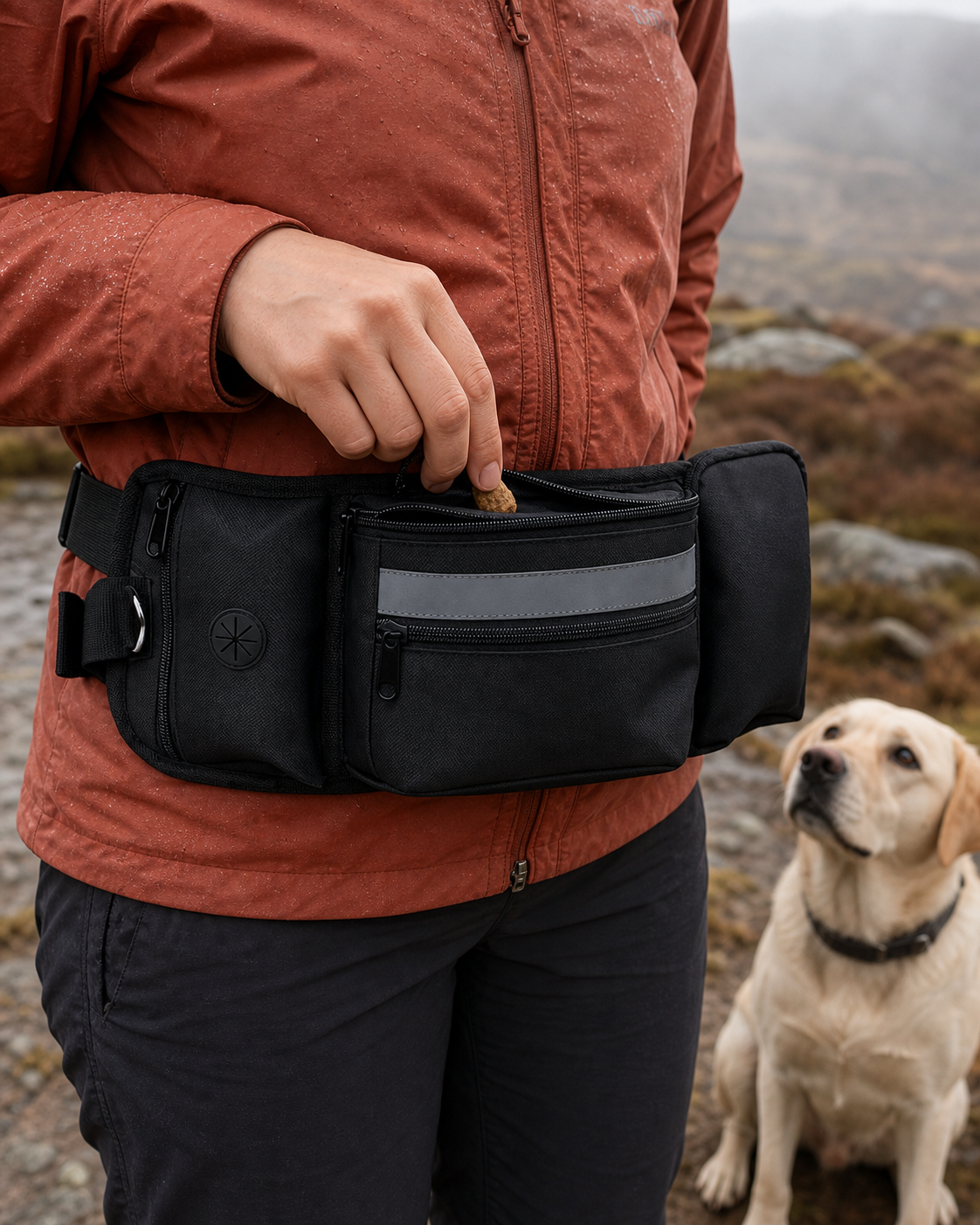
Moorland's Multi-Pocket Utility Trail Pack is one possible carrying option. Compare it with your own essentials and how you dress for walks. Its listing and photographs do not establish that it fits every body, coat or load. If your existing bag works after reorganising it, there is no need to replace it to complete the station.
Separate drying from storage
A wet item and a stored item have different needs. Follow the exact care instructions for each lead, harness, towel and bag; do not assume they can all go in the same wash or beside the same heat source. A drying arrangement should not block a radiator, doorway or other household feature, and should be appropriate for the material.
Choose a clear rule for when something returns to the ready zone. It should be suitably cleaned where needed, fully dry according to its instructions and checked for problems. Otherwise the station can quietly transfer moisture into a cupboard or put a damp item back against clean equipment.
Our harness and lead cleaning guide covers the product-care questions in more detail. This station is about the handoff between stages: used, cared for, inspected and ready. Keep those stages visible enough that another household member does not have to guess.
Store waste bags where they can be counted
Waste bags are small, but running out of them creates a disproportionate amount of last-minute inconvenience. Keep a ready roll in the carrying setup and a modest spare supply in a known place. Check the supply before it becomes a problem rather than adding several half-used rolls to different coat pockets.
A simple refill trigger is enough. You might keep one unopened spare visible and add bags to the shopping list when that spare is opened. The exact quantity is a household choice, not a rule. The important thing is that “we have bags somewhere” becomes a specific, checkable arrangement.
Used waste bags do not belong in the storage station. Dispose of them appropriately and follow local arrangements. The RSPCA's responsible walking guidance includes clearing up after your dog and taking litter away. Keep clean supplies separate from anything used on the outing.
Design for a second walker
Imagine someone you trust is taking the next walk without you. Can they identify the correct equipment, find spare bags and understand what needs checking? If not, the system still depends on your memory. A small written note can remove that dependence without turning the hallway into a training manual.
For a household with more than one dog, label equipment clearly and keep each dog's set distinguishable. Similar colours or clips do not prove that items are interchangeable. Record the correct pairing in an accessible place, and do not encourage a visitor to infer fit from appearance.
Keep sensitive information separate. A station note may say where to find the dog's routine, but it does not need to display personal telephone numbers, alarm details or your full daily schedule to everyone entering the house. Organisation should make the handover clearer without broadcasting information unnecessarily.
A small-hallway example
Consider a fictional household with one dog, two regular walkers and a narrow entrance. They initially plan a bench, three baskets and several hooks. When they open the door and put on coats, the bench leaves too little room. The attractive plan fails the ordinary-use test before anything is bought.
Instead, they keep one suitable hook inside an existing cupboard, a small ready bag on a shelf and spare bags in a labelled box higher up. Wet equipment goes to an appropriate drying area elsewhere. A card inside the cupboard lists what the bag needs. The front door area stays clear.
The change is not simply smaller storage. Each location now has a defined job, and both walkers use the same refill rule. The arrangement may look less impressive in a photograph, but it addresses the actual problems: missing equipment, unclear readiness and limited floor space.
A larger-home example
Now imagine a household with a utility room and several outdoor interests. Dog equipment has become mixed with gardening gloves, sports kit and shopping bags. The available space is generous, but the useful items still disappear. Buying more containers would not automatically solve the lack of boundaries.
They give one shelf to ready dog-walking items and one suitable area to used equipment awaiting care. Spare supplies stay together in a closed container. The shared family bag no longer sits in the ready zone, because people repeatedly borrow its contents. Each walker adds personal belongings at departure.
This example shows why square footage is not the main issue. A large room can be harder to navigate than a tiny cupboard if every surface has several purposes. Decide the jobs first, then choose the smallest amount of storage that supports them.
Run a five-walk trial
Try the arrangement for five normal departures and returns before treating it as finished. Do not buy decorative extras during the trial. Notice what moves, what nobody uses and where an item ends up despite the new rule. Those observations tell you whether the layout fits behaviour or merely looks organised at the start.
Change one thing at a time. If the lead always lands on a chair, ask whether the chosen hook is inconvenient, too high or hidden behind another item. Moving the hook may work better than reminding everyone to be tidier. A good system makes the preferred action reasonably easy.
After the trial, remove surplus containers and duplicated supplies. Keep the arrangement light enough to reset quickly. The station should reduce the work of taking a walk, not become another household project that needs a long maintenance session every weekend.
Give the station a brief weekly reset
Choose a regular moment to look over the ready zone. Refill consumables, remove unrelated items, check that equipment awaiting care has not been forgotten and update any handover note. This is an inventory check, not a compulsory deep clean of the whole hallway.
Use the reset to notice repeated problems. If a bag is always overloaded, reduce what lives inside it. If damp items keep returning too soon, make the ready rule clearer. If one person never uses the system, ask what makes it awkward rather than assuming they are unwilling to help.
As the season changes, swap the relevant extras deliberately. Keep occasional items accessible elsewhere rather than piling them into the everyday zone. The layout can adapt to winter coats, summer outings or a different walking schedule while retaining the same simple jobs.
Your station checklist
- The door opens fully and the walking route through the house remains clear.
- Ready equipment is distinct from wet, dirty or questionable equipment.
- Waste bags have a visible refill trigger.
- The carrying bag has a clear packing rule.
- Everyone who walks the dog can identify the correct equipment.
- Food, medicines and cleaning products are stored appropriately.
- The system can be reset without a large organisation project.
Build around the walk, not the storage. Start with what happens at your door, give each stage a clear home and test the arrangement before adding more. A practical station can be modest, ordinary and extremely useful—the next walker should simply find what they need.

Leave a comment
This site is protected by hCaptcha and the hCaptcha Privacy Policy and Terms of Service apply.