
A café stop with your dog is easier to plan when you treat it as a separate part of the outing. Confirm the venue's current dog policy, consider the space and noise, and keep a suitable alternative. “Dogs welcome” does not mean every dog will enjoy every table at every time.
A drink after a walk can be a pleasant way to meet a friend or finish an afternoon. It can also become awkward if you arrive with a wet dog, a full bag and no idea where you are permitted to sit. A little preparation keeps the stop proportionate: the café is an optional pause, not something the dog must tolerate because the people have already ordered.
Check the actual venue, not a generic list
Look at the café's own current information and ask if the policy is unclear. Some venues have particular dog areas, outdoor-only arrangements or limits that depend on the space. A directory label or an old review may not explain the rules for the visit you are planning.
Make the question specific: how many dogs are coming, whether you hope to sit inside and whether there is a suitable area at the intended time. Do not assume one branch follows another branch's policy. Keep the answer with the rest of the outing plan if it changes your decision.
If the café is part of an estate, attraction or garden, check the wider access arrangements too. Permission to sit in one café does not automatically grant access to every part of the site. Read the relevant official information before making the stop the centre of the day.
Choose the stop for the dog as well as the people
Consider how your dog normally responds to close passing, other dogs, food and unfamiliar noise. A busy café is a different environment from an open path. You do not need to make the dog part of every social activity simply because a venue permits it.
The Dogs Trust settle-training guide provides a separate reward-based training resource for helping dogs learn to relax. A crowded café should not be treated as a guaranteed first lesson. Seek qualified support if your dog's needs are unclear or the situation is difficult to manage.
Choose a simpler outing if needed. Meeting your friend for the walk without a café stop can still achieve the social purpose. Alternatively, make arrangements that suit the dog's care rather than requiring them to fit a fixed dining plan.
Think about arrival before choosing the table
The entrance may be the busiest part of the venue. People may be queuing, carrying drinks or moving through a narrow doorway. Pause somewhere suitable to assess the arrangement rather than entering while reorganising the lead, coat and bag.
If two responsible adults are present, one can ask about seating while the other remains with the dog in an appropriate place. If you are alone, choose a venue and ordering arrangement you can manage without leaving the dog unattended or obstructing an entrance.
Do not tie the dog to an unsuitable fixture and disappear inside to find out what is happening. The plan needs to work from arrival through ordering, sitting and departure. A venue can be welcoming in principle while its particular layout does not suit your visit.
Look for usable space, not only a quiet-looking corner
Check where the dog can remain without blocking a passage or extending a lead across other people. A table beside a service route may involve more passing than one farther from the counter. A corner can be helpful or cramped depending on the actual layout.
Ask staff which permitted area would work rather than moving furniture or assuming a larger table is available. Keep the dog's space distinct from chairs, food surfaces and other visitors' belongings. Follow the venue's current rules throughout.
Think about the exit too. If someone needs to leave with the dog, can they do so without climbing past the whole group? An easy departure can matter more than the most attractive view, especially when you are still learning which settings suit the dog.
Keep the lead within your own space
Use suitable equipment and remain responsible for managing it. A long line across a shared floor can obstruct people even when the dog is lying still. Check how the lead sits relative to chairs, bags and the route used by staff.
Do not attach the dog to a lightweight chair, table or another fixture without appropriate permission and a suitable arrangement. A piece of furniture is not automatically a dependable tethering point. Keep supervision and control with the responsible person.
If the layout makes management awkward, choose another area or leave. You do not have to solve every unsuitable table with more equipment. Sometimes the useful decision is simply that this space does not work for this visit.
Plan drinking arrangements independently
Check what your dog needs for the outing and how you will provide it. Do not assume a venue has a bowl or that a shared bowl is the arrangement you prefer. Carry suitable equipment where needed and follow its cleaning instructions.
Keep drinking items separate from used waste bags and muddy gear. A bag that worked on the walk may need a small reorganisation before you sit down. Avoid putting equipment on a food surface unless the venue specifically provides an appropriate arrangement.
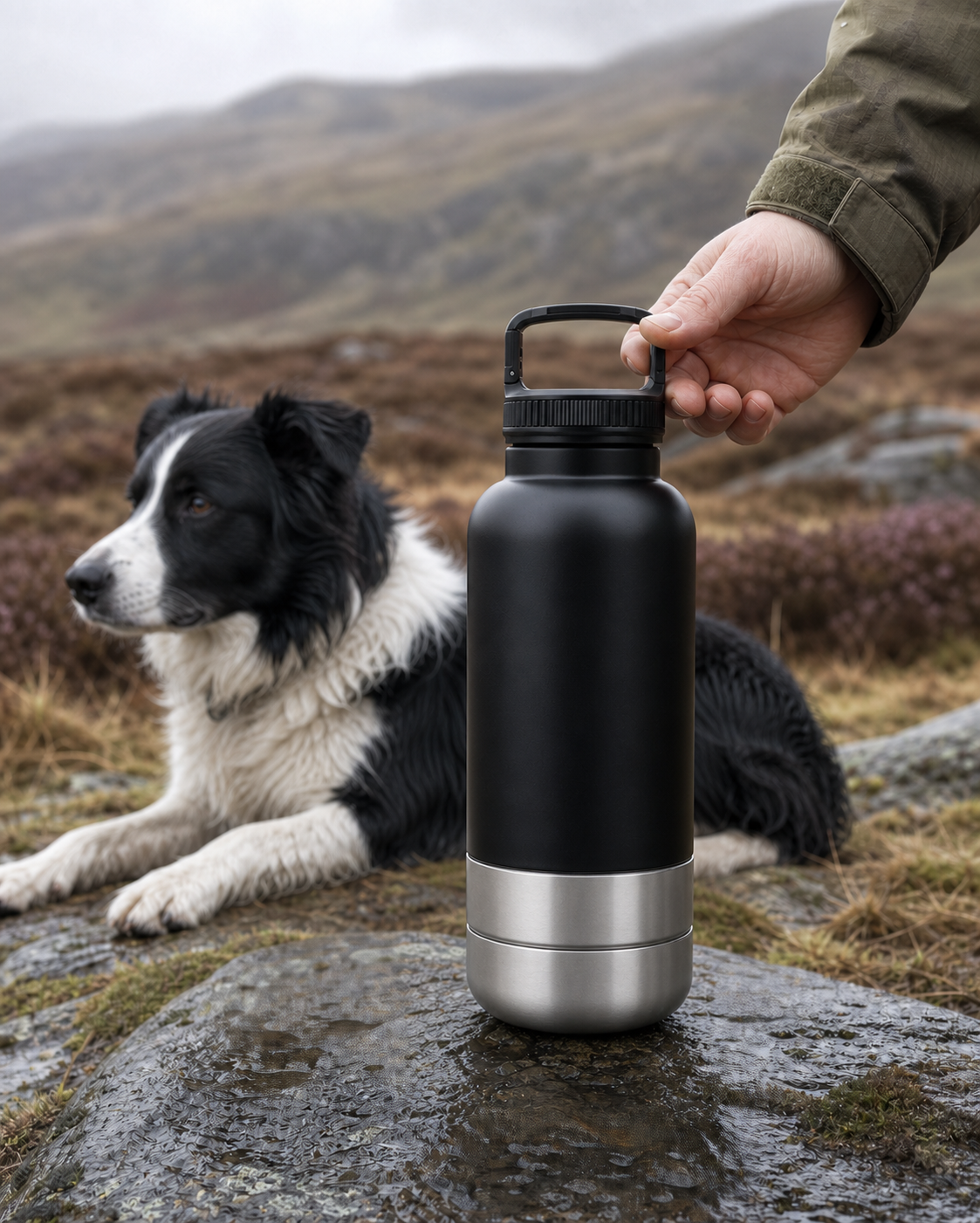
A product described as a dog bottle still needs to be checked for your own use. Our dog-water-bottle comparison guide covers capacity, access and care questions. This café article does not prescribe a universal water amount or assume every bottle suits every dog.
Keep food expectations clear
Decide how you will manage the dog's supplies without turning the table into a shared feeding area. Follow individual dietary advice and venue rules. Do not offer human food or a marketed dog treat without checking whether it is appropriate for your dog.
Ask companions not to feed the dog casually while you are managing the outing. A clear expectation avoids mixed messages and keeps the handler informed about what has been offered. The conversation can be friendly and brief.
If you need to focus on eating, make sure the dog remains appropriately supervised. The fact that everyone is seated does not mean the management task has ended. Adjust the plan if the group cannot give the situation the attention it requires.
Pack the stop, not another expedition
Carry what the actual walk and pause require, keeping frequent items accessible. A small organised kit can be more useful than a large bag filled with duplicates. Check that you can sit and stand without the bag catching the lead or blocking the path.
The Moorland Multi-Pocket Utility Trail Pack is one option to compare with your usual essentials. Its photo shows the product's appearance, not a guarantee that it holds everything needed for a café visit or fits every coat and body.
You may already own a suitable bag. Try the loaded arrangement at home and remove unnecessary items before deciding to buy another. Organisation is often a more direct solution than adding a new accessory to an unclear packing routine.
Match the social plan before meeting
Tell friends whether you are planning a short optional stop or a long meal. Someone expecting an afternoon at a table may be disappointed if you need to leave promptly, while you may feel pressured to stay. A clear expectation prevents that conflict.
Agree that the walk can remain the main activity. If the café is too busy, unavailable or unsuitable for the dog, use the alternative without turning it into a debate. Your companions do not need every detail of dog care, but they should understand the boundary.
For a group with children or more than one dog, be especially clear about adult responsibilities and space. Do not assume several individually manageable outings become one manageable group simply by combining them at a table.
An illustrative first-visit plan
Imagine two friends with one dog who normally walk a familiar route. They want to try a café stop but have not visited the venue together. They check the current dog policy, choose an appropriate time and agree that the stop is optional.
On arrival, one person asks about permitted seating while the other manages the dog appropriately. The available table is beside a crowded passage. Rather than moving chairs into another person's space, they decide to continue the walk and meet for refreshments another time.
This is a fictional example, not a review of a particular café. The plan succeeds because it includes a workable alternative. They have learned something useful without treating a purchased drink or a social expectation as a reason to remain.
An illustrative repeat-visit plan
Now imagine a venue the handler already knows, with a permitted area that has worked previously. They still check current arrangements and assess the situation on arrival. A familiar place can be unusually crowded or have a different layout on another day.
They keep the bag compact, the lead within their space and the stop consistent with the dog's needs. They do not assume that a previous calm visit proves every future visit will feel the same. If the situation changes, they change the plan.
The useful habit is attention, not a claim that the dog is now a café dog forever. A label can simplify conversation, but it should not replace what the responsible person can see.
Know your easy exit
Before ordering, decide what would make you leave: unsuitable space, difficulty managing the dog, a change in conditions or a visit that no longer suits the plan. Keep the decision practical rather than waiting until everyone is frustrated.
If you need to leave, manage payment and belongings without losing responsibility for the dog. A companion can help where appropriate. If you are alone, choose an ordering arrangement that lets you complete those tasks without creating a problem.
Do not view departure as a failed training session. This is a social outing with a dog, not proof of a particular behaviour. You can revisit the wider question with qualified help or choose different kinds of shared activities.
Leave the space considerately
Check that you have collected your belongings and any dog-related supplies. Dispose of waste appropriately and tell staff if a problem needs attention. Do not use a venue's cleaning products on your equipment or its surfaces without asking.
Keep the exit clear as you put on coats and reorganise the bag. The final few minutes are still part of the visit. Moving outside to a suitable place before discussing the next destination may give everyone more room.
If you recommend the venue afterwards, be specific about what you experienced and when. A pleasant visit in one permitted area is not a universal guarantee for every dog or every group. Clear details help another person ask the right questions.
Your café-stop checklist
Check the outdoor option as a real option
Outdoor seating may be the permitted arrangement, but look at whether it actually suits the conditions and group. A photograph of a terrace in sunshine does not describe a windy or wet autumn afternoon. Check the available space, shelter and access without assuming a cover creates the same environment as an indoor room.
If the outdoor option is unsuitable, do not let the dog's presence become a source of resentment because somebody expected an indoor meal. Agree the alternative beforehand. You might shorten the stop, continue the walk or choose a different social arrangement. The important part is that the choice remains considerate to the people and dog rather than being driven by a label on a directory. A dog-friendly venue can be a useful possibility without being the right destination for every day.
- Confirm the venue's current dog policy and permitted area.
- Choose the visit around the dog and actual group.
- Assess entrance, seating, passing space and exit.
- Keep equipment and drinking supplies organised.
- Agree the length and optional nature of the stop.
- Leave if the arrangement does not work.
A good pause should still suit the outing. Confirm the details, keep the dog's needs visible and choose considerate space. The café can complement a walk without becoming something you must complete.

Leave a comment
This site is protected by hCaptcha and the hCaptcha Privacy Policy and Terms of Service apply.