
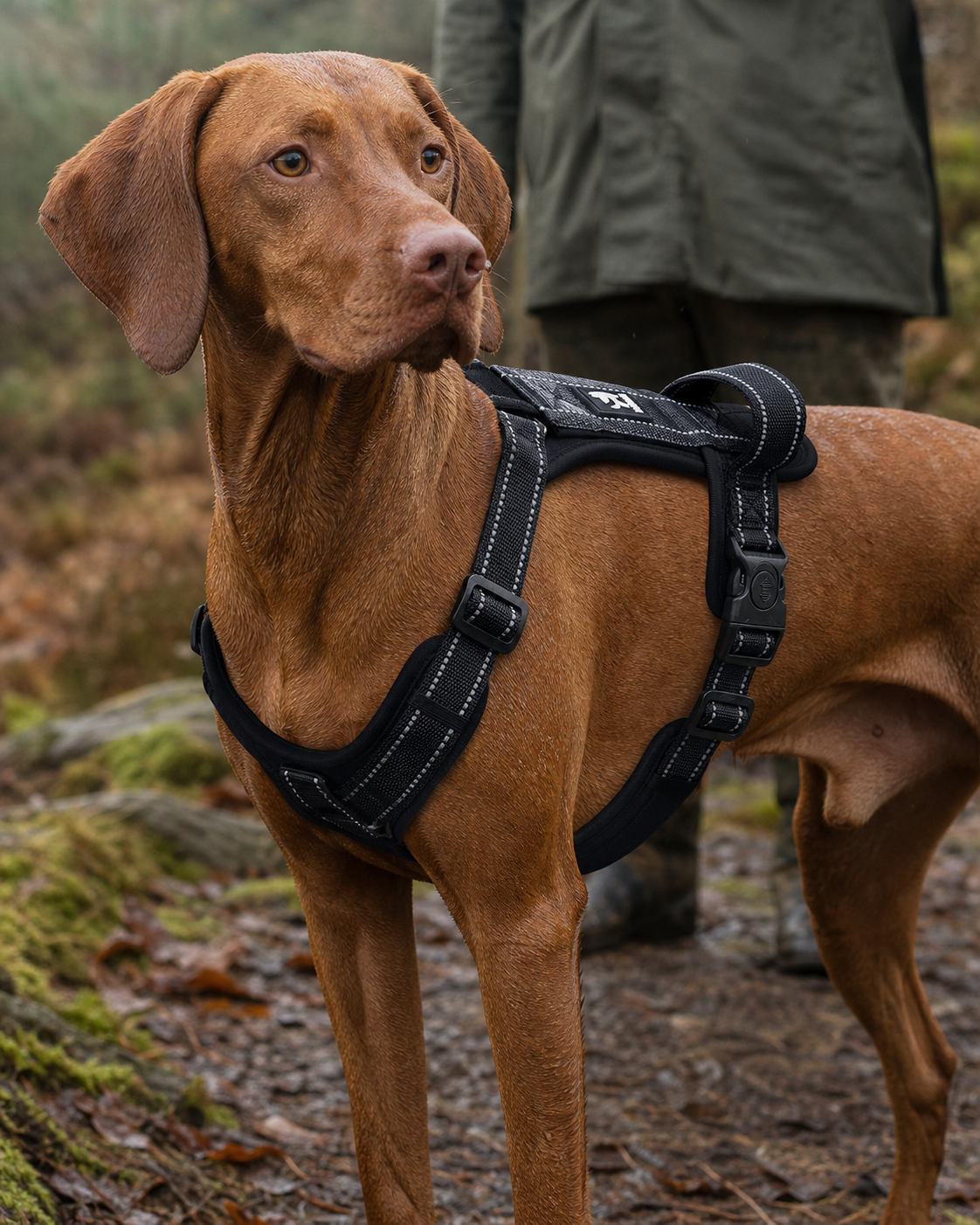
When a dog walk may pass grazing livestock, make the route decision before entering the field rather than treating the encounter as part of the adventure. Check the permitted path, current notices and the actual animals present. A familiar route or a calm-looking photograph does not establish that the same outing is appropriate today.
This is general countryside-planning guidance, not an animal-handling or rescue tutorial. The official source below applies to England and Wales; other jurisdictions have their own guidance and access arrangements. We have not inspected your route or assessed your dog. Choose an appropriate alternative and seek qualified advice when an essential question remains unresolved.
Read the official boundary accurately
The Countryside Code advises giving livestock and horses plenty of space and keeping dogs under effective control. It recommends leads around livestock and sets specific lead requirements on Open Access land. Importantly, it also says to release your dog if you feel threatened by livestock or horses rather than risk injury protecting the dog. Read the full current guidance: “always hold the lead whatever happens” is not an accurate summary.
Keep those different situations separate. Planning not to disturb grazing animals is one question; responding to an actual threat is another. Do not turn a short general article into a set of tactics for crossing a field of animals. If the planned route already feels unsuitable, a different outing is a sensible decision before an encounter occurs.
Do not infer a universal permission from the presence of a public path. Access information identifies a route, not a guarantee that the circumstances fit every dog and handler. The individual dog's needs, the group's capability and current conditions still matter. An appropriate decision can be to postpone or choose another permitted walk.
Find out whether livestock may be present
Read the current official route and visitor information where available, including any land-manager notices. Ask about an essential uncertainty rather than relying on a comment from another season. A visitor's report that a field was empty belongs to that visit. It does not establish the arrangement on the day you intend to walk.
If the route description mentions grazing land, include that in the brief shared with companions. Do not bury the detail under the scenic attractions. Someone choosing the outing should understand that it is a working landscape with responsibilities and possible changes, not a pet exercise area arranged around the group's preferences.
Keep the question practical when contacting a site. Identify the exact route and proposed date, then ask where current grazing or access information is published. The land manager can describe their arrangements; they cannot assess whether your own dog will respond appropriately. That individual question belongs with the relevant qualified professional.
Look again at the actual arrival point
When you reach the route, compare the current scene and notices with what you planned. Do not continue automatically because the walk is familiar. A field can be used differently, a boundary can matter to the intended path or a notice can change the route decision. Resolve that information before committing to the next section.
Give the responsible handler time to read and decide without being pulled along by the rest of the group. A companion moving ahead may create pressure to follow before the dog is ready. Agree in advance that the handler can pause or choose an alternative without having to justify the decision through a difficult encounter.
Do not enter a field just to find out whether the animals will react. That turns an information gap into an unnecessary test. If the actual circumstances do not match the plan you can appropriately manage, return or use a confirmed permitted alternative. Do not improvise access across adjoining land because it looks empty.
Keep the dog's needs individual
Think about what you know from ordinary walks and any professional care or behaviour advice already in place. Do not assume a dog that is comfortable around pets at home will be comfortable near grazing animals. This article does not provide a training programme or determine readiness for a livestock route.
If you are unsure, ask your vet or an appropriately qualified behaviour professional before planning the outing. Describe the actual environment and concern. Avoid asking only whether a breed is good with sheep or cattle; the relevant question concerns the individual dog and circumstances rather than a broad reputation.
Keep exercise ambitions separate from that assessment. A route being longer, more scenic or popular does not make it a better choice for your dog today. You can enjoy countryside walks without choosing every possible landscape feature. The outing should serve appropriate care and enjoyment, not prove a capability to an audience.
Discuss the group before discussing the distance
Make sure everyone understands who is responsible for the dog and who is navigating. One person may do both only when that is practical. Do not assume that another adult can take over handling because they are nearby. Agree any change of responsibility clearly and keep the dog's familiar requirements available.
Children should not be given responsibility for managing the dog through an uncertain livestock situation. Adults need to make the route and care decisions. This is not a family safety assessment or a substitute for professional advice about a particular child or dog. Keep the outing within the actual group's appropriate capabilities.
Explain that an alternative does not mean the day has failed. If some companions want a route that the dog cannot appropriately join, consider separate plans rather than pressuring the handler. The whole group does not have to complete one identical outing for everyone to have useful time outdoors.
Separate equipment fit from route suitability
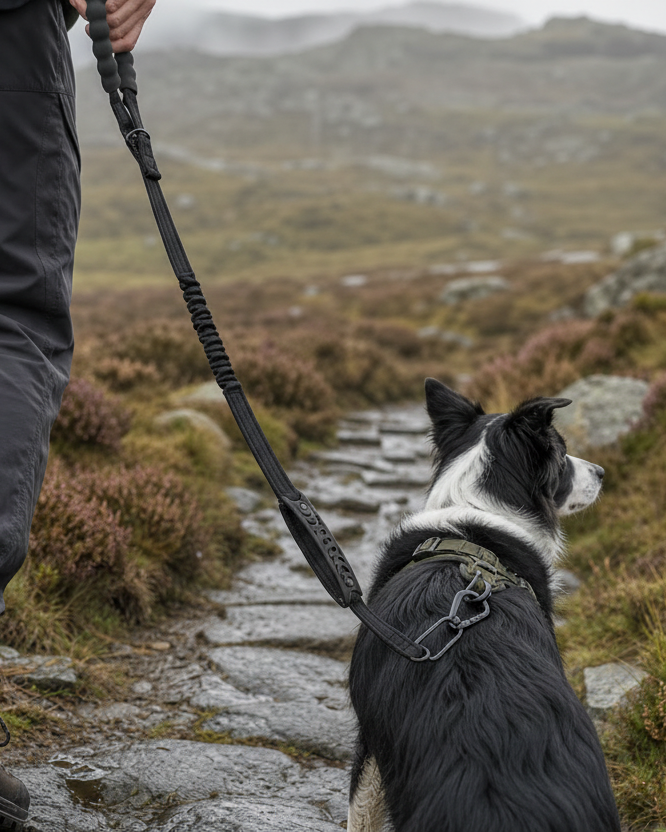
Use familiar, suitable walking equipment whose condition and ordinary operation you understand. A new landscape is not the right place to discover that an adjustment is unclear or a component is damaged. Follow product instructions and any professional guidance. Equipment preparation supports a decision; it does not make every encounter manageable.
Do not expect a stronger-looking collar, harness or lead to resolve a behaviour or access question. A product photograph cannot certify how a dog will respond near livestock. Resolve the individual care question and the route question separately. Our harness fit guide covers measurement, not an animal-encounter guarantee.
Keep the handler's load practical too. The person responsible should not be juggling unrelated bags and a camera while trying to understand a new section of route. Decide which optional items can stay packed and when a photograph is simply not appropriate. The route does not need to produce content to be worthwhile.
Do not use livestock as a photograph opportunity
A dog pictured near a grazing animal can appear charming while hiding important context. Do not create that scene by approaching, feeding or staging an encounter. Let the walk remain within the actual permitted arrangement and the dog's needs. A personal photograph is not a reason to make the situation more complicated.
If you photograph a landscape from an appropriate position, keep the caption accurate. Do not imply that animals were available for interaction or that the route is always suitable for all dogs. The picture records one view at one time. It does not establish a safety result, a training success or current access for another person's visit.
Similarly, do not share an old photograph as evidence that there are no livestock on the route now. When recommending a walk, send the current official information and explain what you personally observed on the date of your visit. The distinction between an image and a current source helps other walkers make their own decision.
Choose alternatives that are actually permitted
Study the route in advance so you understand whether a different official option is available. A nearby line on an app may represent another kind of path, private land or a connection you have not checked. Do not treat proximity as permission. If no suitable alternative is confirmed, choosing another destination may be simpler.
Keep an alternative appropriate to the whole group rather than merely shorter. It may have different terrain, access or travel requirements. Check those before relying on it. The purpose of a backup is to reduce uncertainty, not to hide a second unresearched plan behind the word alternative.
Be willing to end the outing if the plan no longer fits. Travel, parking or effort already spent do not require you to continue through an unsuitable section. A good decision uses the information available now, not the desire to justify the original idea. That is particularly important when an animal encounter could be avoided.
An illustrative pre-entry choice
Imagine a household that planned a familiar countryside loop using current route information. At the entrance to one section, they see grazing animals and a notice they had not expected. The responsible adult pauses, reads the information and decides that the section does not fit the dog's current professional plan.
They do not enter to see whether the dog will manage. They choose a permitted alternative they already understand, or return if that option is not suitable. This is an illustrative planning example, not a report of a Moorland visit or a claim about a particular farm. Its useful result is a decision made before an avoidable encounter.
The household keeps a note to recheck the route before a future visit. It does not label the whole destination bad or the dog unsuccessful. The circumstances may differ another day, but the next decision still needs current information and the individual care context.
Keep concerns factual
Make a question answerable
If information about grazing is unclear before travel, ask the relevant land manager about the particular section and intended date. Include the official route name and describe which entrance or stretch you mean. A question about whether the entire countryside is dog friendly is too broad to guide a useful decision.
You might ask whether a current notice applies to the mapped walking route and where the latest visitor information can be found. Do not ask someone to guarantee that your dog will be safe: that would confuse local information with an assessment of an individual animal. Keep the reply alongside its date, rather than turning one answer into a permanent recommendation for every season.
If no answer arrives, that uncertainty remains unresolved. It is not permission, and it does not establish a defect in the destination. Choose a different confirmed option if the missing information is important to your plan. This approach respects both the people managing a working landscape and the responsibility you retain for deciding where to take your dog.
If you need to report an access issue or ask the land manager about something observed, describe the location, date and actual concern. Do not infer motives or publish an accusation from an unclear encounter. Use the appropriate official route for the question and keep safety concerns separate from opinions about the scenery or popularity of the walk.
For injury, distress or an urgent incident, seek the appropriate qualified or emergency response rather than relying on this article. We cannot assess the situation remotely or provide rescue tactics. A general planning guide should make that limit clear instead of offering confidence beyond its scope.
If your dog has a new health or behaviour change after a walk, contact the relevant professional and explain what happened accurately. Keep observations distinct from a diagnosis. The value of a factual account is that it helps someone qualified ask the right questions.
Your before-the-field questions
- What current official information describes grazing and dog access?
- Does the actual scene match the planned route and date?
- Can the individual dog and responsible handler appropriately use this section?
- Have companions agreed that a changed plan is acceptable?
- Is equipment familiar and suitable without being treated as a guarantee?
- Is any alternative route genuinely confirmed and permitted?
- Have we read the full official guidance, including the distinction between prevention and an actual threat?
The useful livestock decision happens before an encounter, not after a photograph or a distance target has become the priority. Check the route, respect the working landscape and keep individual needs central. An appropriate alternative is part of good countryside judgement, not a lesser version of the walk.

Leave a comment
This site is protected by hCaptcha and the hCaptcha Privacy Policy and Terms of Service apply.